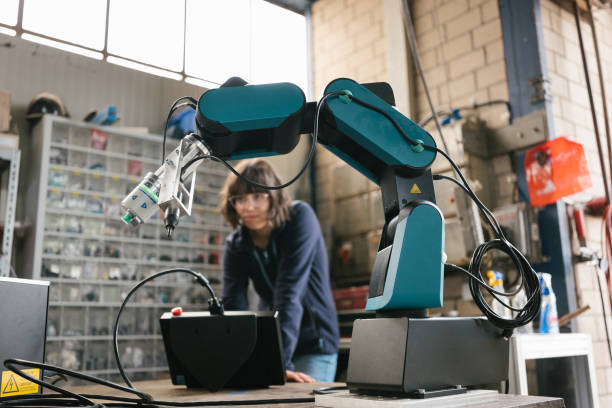
In the digital era, businesses are continually seeking innovative solutions to streamline their operations, enhance productivity, and reduce costs. One such groundbreaking advancement is RPA Robotic Process Automation. RPA is transforming industries by automating repetitive tasks, enabling humans to focus on more strategic activities. This evolution is not just about efficiency; it is about redefining the way businesses operate, offering a competitive edge in a rapidly changing market landscape.
What is RPA Robotic Automation?
RPA Robotic Automation refers to the use of software with artificial intelligence and machine learning capabilities to handle high-volume, repeatable tasks that previously required humans to perform. These tasks can include queries, calculations, maintenance of records and transactions, and more. By implementing robotic process automation, organizations can achieve significant efficiency gains.
Benefits of RPA Robotic Automation
The implementation of rpa robotic automation offers several key benefits:
- Cost Efficiency: RPA can reduce processing costs by as much as 80%. Robots are cheaper to operate than a full-time employee and can work around the clock.
- Accuracy and Quality: RPA provides error-free results, which is crucial for enhancing quality and accuracy over manual processes.
- Improved Speed: Tasks that took hours or days can be completed in minutes, boosting overall efficiency.
- Scalability: RPA systems can be easily scaled up or down to accommodate changes in business needs, offering flexibility to businesses.
- Enhanced Security: With RPA, sensitive data handling is more secure due to reduced human interaction.
Applications of RPA Across Industries
The versatility of rpa process automation allows it to be applied across various industries. Here are some examples:
Financial Services
In the financial sector, RPA is used for automating processes such as account opening, transaction processing, and regulatory compliance. The use of robotic process automation software helps in managing large volumes of data with precision and speed.
Healthcare
Healthcare providers leverage RPA for patient registration, billing, claims processing, and managing patient records. This not only reduces the administrative burden but also allows healthcare professionals to focus more on patient care.
Retail
RPA assists retailers in inventory management, order processing, and customer support. By automating these tasks, retailers can enhance their operational efficiency and customer satisfaction.
The Future of RPA
As technology continues to evolve, the capabilities of RPA are expected to expand significantly. The integration of advanced technologies such as artificial intelligence and machine learning into RPA systems will enable more complex decision-making processes. This evolution will further enhance the value proposition of rpa robotic process automation, making it an indispensable tool for modern businesses striving for excellence.
In conclusion, RPA is not just a tool for automation; it is a strategic enabler of enterprise transformation. By embracing RPA, organizations can achieve greater efficiency, improved accuracy, and substantial cost savings. As more businesses recognize the potential of this technology, the adoption of RPA is expected to continue its upward trajectory, reshaping the future of work.